

How to Avoid Common Locksmith Scams and Protect Yourself

Importance of Emergency Locksmith Services
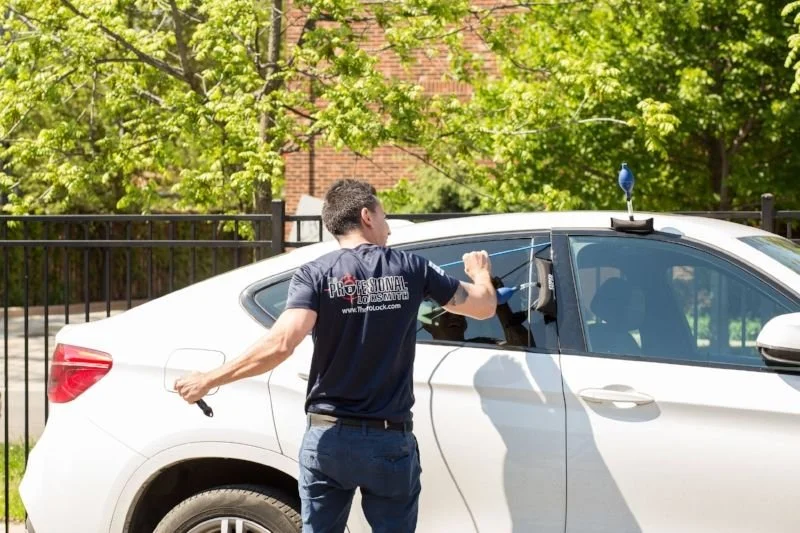
Emergency locksmith services are crucial for many reasons. You might have locked yourself out of your home or office, lost your car keys, or locked yourself in a parking lot.
The Importance of Home Security - Tips and Tricks to Keep Your Home Safe

The Benefits of Smart Locks and Home Automation Systems

How to Rekey Your Locks - A Step-By-Step Guide

Rekeying your locks is an effortless and cost-effective way to improve the security of your home. You can do it yourself with a rekeying kit, or hire a local locksmith to complete the work for you
How to Choose the Right Lock for Your Needs

When it comes to property security, there are various types of locks you can choose from. Knowing what each lock does will help you select the one most suitable for your requirements.
When selecting a lock, there are several factors to take into account such as materials, design, and functionality. Furthermore, you must take into account the environment in which it will be utilized. Let’s look at some of the types of locks you can use on your property.
Why You Should Consider Adding a Latch Guard to Your Lock
You’ve probably used the old credit card trick before to get into a door or used other tricks to open a door in which you can actually see the lock. These types of doors are lacking a latch guard and this extra little feature is what protects a door from getting broken into using the oldest tricks in the book. This inexpensive addition to a door could mean the difference between a break-in and a close call. Take a look at why you need to add a latch guard to your lock.
What is a latch guard?
A latch guard is intended to protect your latch from someone trying to pry it open. These are pieces of metal that go over your door’s latch to block it from being accessed while locked. When a person comes up to the door and wants to try to access, they can skip over the knobs and lever and go straight to your latch to try to break in.
The door latch is a spring-loaded piece reaching from the door to the door jamb. A burglar will want to try to release the latch from the jamb of the door by prying it open with any tool they may have. A latch guard over the latch will require the burglar to attempt to pry it open further from the latch which will typically leave them locked out, but also standing around long enough to potentially get a good look at them on security footage.

Why you need one
If you’ve ever worried about someone trying to use a credit card to open your door, it’s because you don’t have a latch guard to give you that extra security. Sometimes locks aren’t properly installed or they simply get worn down and more likely to get bypassed. When you can see the actual latch, that means you are at risk of lock tampering. A latch guard takes that possibility out of the equation now that you can’t see the lock and nothing can access the lock in the event that it’s vulnerable and able to be easily bypassed. This could be a major security risk for your office that has doors that open out.
When a latch guard is applied, a burglar that is trying to move the frame of the door to pop the latch out of the frame can no longer do so. They would normally try to do so with a break bar or a long, narrow object inserted into the exposed crack at the latch, but a guard prevents any access for something to be inserted and forcing the latch to pop out.
It’s the best way to prevent a break-in to your business after hours when you are carrying sensitive data or money that you wouldn’t want accessed by a burglar. In fact if you were to get broken into, it’s possible that the intruder could cut into the wall and gain access to a business next door causing even more damage.
Types of latch guards
Latch guards are typically just a sheet of metal to cover the latch on the door, typically installed on exterior doors of commercial buildings to prevent break-ins to a business at night. While there is typically a one-size-fits-all solution, you can get a custom-made, full-length astragal to run the entire length of your door. These are great if you need even better protection because they will fit your door like a glove.
If security is a high priority for your business, be sure to get a latch guard installed to those exterior doors by a professional locksmith today.
3 Types of Door Lock Repairs
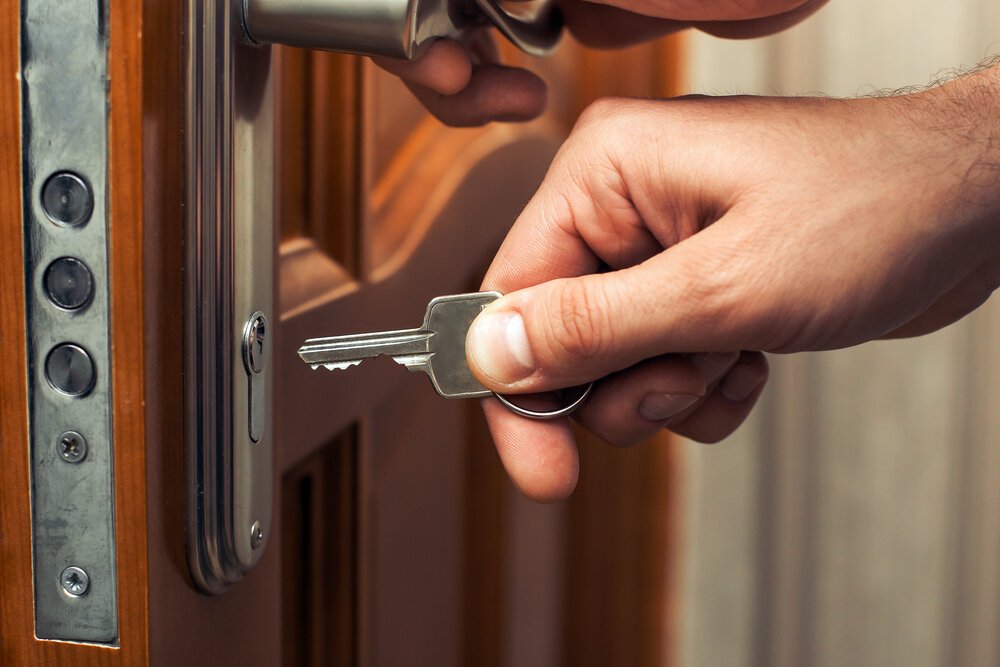
When you have a lock that needs to be repaired, it's not doing the job you want it to do. Your locks need to be reliable and they need to guard your home or business. If you have a lock that's not working, it's time to call a professional locksmith and get it repaired.
There are many types of lock repairs that you might need. You might notice one of the many issues and not know why it's happening. Let's look at some of the types of door lock repairs you might need.
Door Won't Latch Properly
This is a pretty big issue. If your door lock won't latch properly, you need to get it fixed immediately. Usually, this means the strike plate and the latch are not in alignment.
It might be as simple as tightening the hinge screws or adjusting the strike plate. However, the repairs could be rather minor or could include adjusting the entire door.
If your door lock isn't latching properly, you need to call a residential locksmith. It's important to make sure your door latches properly. Even if you think you can fix it yourself, you might be leaving your door vulnerable if the job isn't done correctly.
Door Lock is Frozen
sometimes, an exterior lock will freeze during the winter. Interior locks can also freeze up due to dirt and wear and tear. While you might need a replacement lock, you can start with a few simple fixes first.
Try putting a little graphite in the keyhole. Then, operate the lock a few times to get the graphite into the mechanism. Sometimes, this is all it takes.
Lock de-icers can help if the lock is frozen, too. This can help with gummy, dirty deposits or during cold weather.
If neither of these options help, you may have to disassemble the lock. When you get to this point, hiring a professional is the right choice. They can assess the situation and make the right recommendation for your frozen lock.
Broken Key in a Lock
A very common repair you will likely need a locksmith for is a broken key in the lock. When this happens, it can be very difficult to remove the broken key yourself. It may also require tools you don't own. If you try to do this yourself and you don't do it right, you could cause quite a bit of damage to the lock.
When you break a key in your door lock, you should call an emergency locksmith. This type of locksmith will show up quickly to help you get the broken key out of the lock and give you access to your home or car again.
Whenever you're dealing with a door lock repair, a professional locksmith is best. You don't want to cause more damage to the lock. With the right help, you won't have anything to worry about. Locksmiths have the right tools and they are highly trained to deal with all types of door lock repairs and issues.
How to Fix Jammed and Stuck Locks
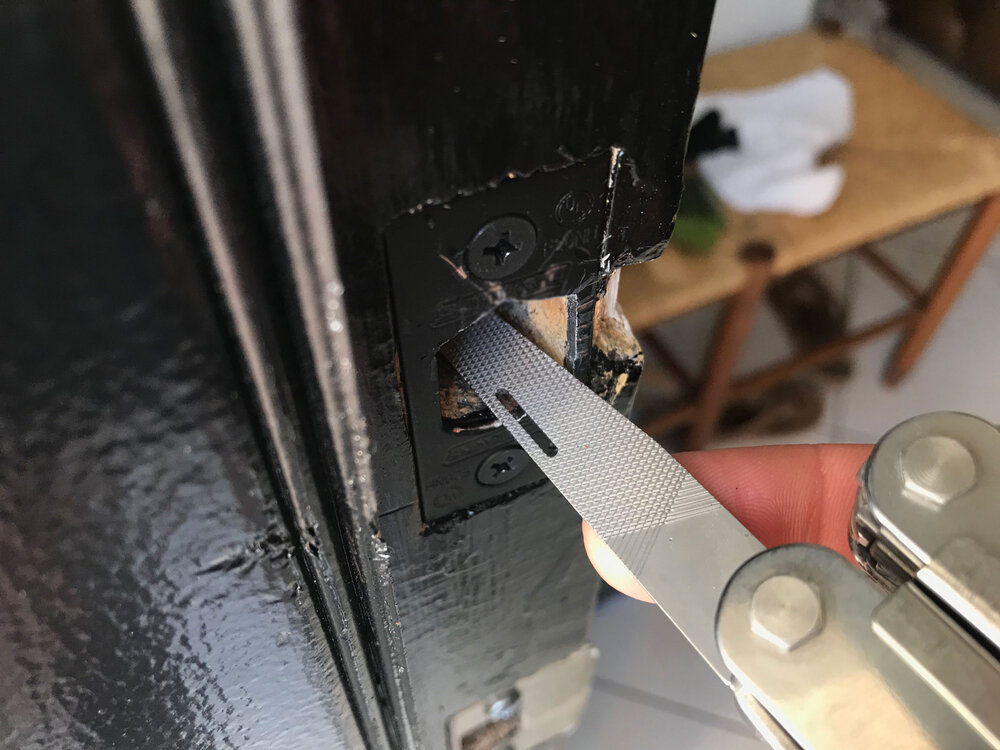
Sometimes you end up with a jammed lock or a stuck lock that means you can’t get into a room, your house, or your car properly. You can’t have a door misaligned from the deadbolt or loose setscrews without ending up with a door jam.
These are things you can fix if you have a little bit of knowledge, the right supplies, and the ability to determine what the problem is. Below we will show you what’s needed to fix your jammed and stuck locks, or what your locksmith could do if you want the professional job done for your home.
Determining the jam or stuck lock
To determine if you have a jam or stuck lock, you’ll want to look at a number of things first. The first sign may be that your knob will turn but the door won’t open. Another may be that the door lock is stuck in an unlocked position, but you’ll want to check to see if another key will work in case your key has been damaged. Perhaps the doorknob lock button is stuck or maybe your deadbolt is stuck in a locked position.
Examine the situation to make sure you know what needs to be fixed and how to handle it. for a stuck button, try turning the handle while pushing and holding the lock button, and then jiggle the handle to see if it helps. If the door lock is stuck in an unlocked condition, try to see if the door will lock when it is ajar in case of an alignment issue.
Get some supplies
Next, you’ll want to get some supplies to check for different issues. You may need to use powdered graphite or TD-40 as a lubricant to help with jammed locks. Get a key-extractor tool and screwdrivers or a multi-magnetic hand tool with a screwdriver set. You may want to use kerosene for any rust removal.
Addressing various issues
Once you’ve tried to unlock the door with a different key in the event that you have the wrong key or a damaged key, you may have a temperature issue. Try to warm up the house if the home has gotten too cold. If it’s a hot location, you may have excess oil or dust, which you can check your key for stickiness or accumulation.
Next, try a key extractor to fix a lock that has a broken key jammed inside. You may need to spray some of that lubricant in the keyhole to make for a smoother removal. A sticky lock happens when a door gets older, so the dry lubricant of the powdered graphite can help to smoothen the jam.
Avoid a WD-40 since it will attract dirt, unlike the TD-40 or graphite. If you’re dealing with rust that is causing the jam, soak your lock in kerosene for a day to remove the rust. Feel free to lubricate the spring mechanism with some Teflon lubricant which will help if it’s becoming faulty and the deadbolt isn’t retracting completely.
Lastly, you may need to use a screwdriver or the multi-magnetic hand tool to fix your jammed lock. This can help you to tighten screws and bolts in the event that something has come loose. Try tightening the hinges if your door is loose on its hinges because it may be causing your latch to sit too low on the striker plate.
Is there a gap between the door and the doorframe? You’ll also want to tighten the set screw because you could have a loose setscrew making the door not opening despite the knob turning.
You don’t have to address a jammed lock or stuck lock on your own. The professionals at Chicago Emergency Locksmith can handle a jam like this in no time and carry the proper tools and skillset for situations like yours.